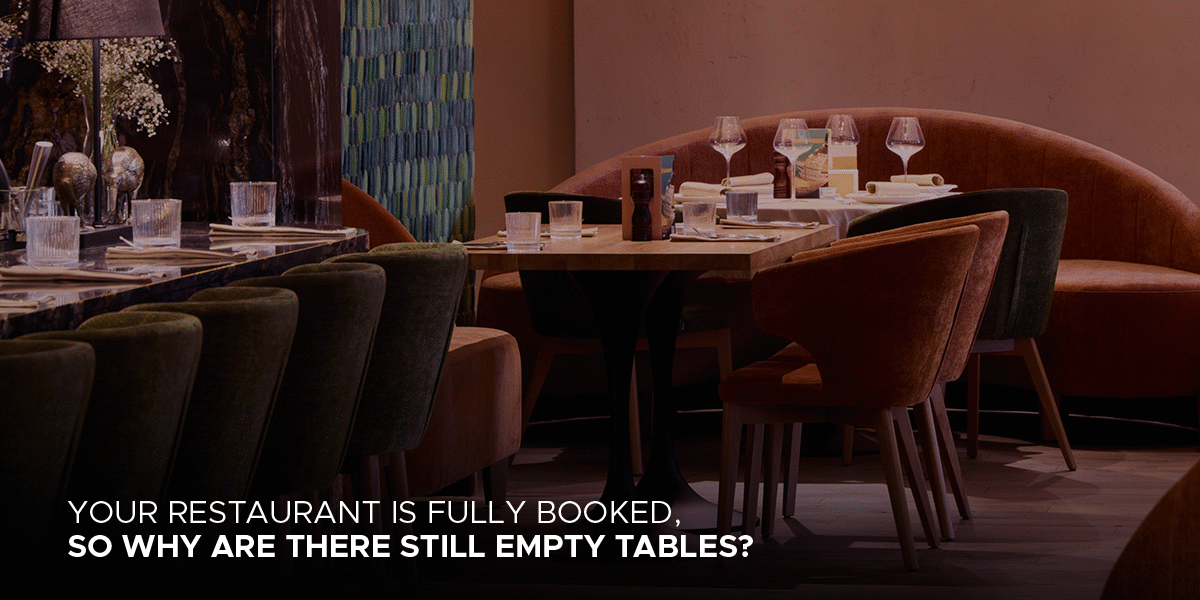
A fully booked reservation list should mean a full restaurant. But many restaurant managers know that this is not always what happens.
You can have dozens of reservations on the books and still see empty tables during service.
Why?
Because being fully booked and achieving high table utilization are not the same thing.
Late arrivals, no-shows, cancellations, uneven reservation times, inefficient table allocation, and gaps between seatings can all leave valuable tables empty.
Understanding these gaps is one of the first steps toward running a more efficient restaurant floor.
What Does Table Utilization Mean in a Restaurant?
Table utilization refers to how effectively a restaurant uses its available tables during service.
It is not simply about accepting as many reservations as possible. A restaurant also needs to consider:
- When guests are arriving
- How long tables are occupied
- Which tables are available
- Party sizes
- Walk-in demand
- Upcoming reservations
- Cancellations and no-shows
- How quickly tables can be reassigned
A restaurant may technically be fully booked at 8:00 PM while having significant availability at 7:00 PM or 9:30 PM.
This is why reservation management needs to go beyond simply recording bookings.
1. Your Reservations May Be Concentrated Around the Same Time
One of the biggest challenges is not always the number of reservations. It is when those reservations happen.
Imagine a restaurant receiving most of its bookings between 8:00 PM and 8:30 PM.
The restaurant may appear fully booked during that window, while tables remain available earlier in the evening.
Understanding reservation trends and peak hours helps managers see where demand is concentrated and make better decisions about availability.
QuickSeat provides reporting and analytics that help restaurants monitor reservation trends, performance, and peak hours.
2. No-Shows Create Unexpected Empty Tables
A reservation blocks capacity because the restaurant expects those guests to arrive.
When they don’t, that table may remain empty during one of the most valuable periods of the evening.
Reservation confirmations, reminders and deposits can help restaurants keep guests informed and give them an opportunity to confirm or update their plans.
QuickSeat supports communication through WhatsApp, SMS and email, and secure deposit payments for certain reservation process.
3. An Empty Table Is Not Always an Available Table
This is an important distinction.
A guest walking into a restaurant may see an empty table and assume it is available.
The host sees something different.
That table may:
- Have another reservation arriving shortly
- Be allocated to a specific section
- Need to accommodate a larger upcoming party
- Be waiting to be reset
- Be part of a different floor configuration
A live restaurant floor plan gives the front-of-house team a clearer picture of what is actually happening.
QuickSeat’s live table management allows teams to visualize and manage the restaurant floor in real time.
4. Cancellations Can Become Opportunities
A cancellation does not necessarily need to become an empty table.
If a restaurant has an active waitlist, newly available tables can potentially be reassigned to guests who are already waiting.
The challenge is timing.
The faster the team knows that a table has become available, the faster they can act.
QuickSeat’s waitlist and walk-in management tools help teams organize waiting guests and notify them when tables become available.
5. Walk-Ins and Reservations Need to Work Together
Restaurants rarely operate with reservations alone.
During a busy service, the host may simultaneously be managing:
- Confirmed reservations
- Late guests
- Walk-ins
- A waitlist
- Tables preparing to leave
- Upcoming bookings
Managing these separately can make it difficult to understand true availability.
A reservation and table management system brings this information into one place, helping the team decide whether a walk-in can be seated without affecting an upcoming reservation.
6. Your Reservation Data Can Help You Plan the Next Service
The value of reservation data doesn’t disappear when the restaurant closes.
Looking at historical patterns can help managers understand:
- Which times receive the most demand
- When cancellations typically happen
- Which days have the highest reservation volume
- Guest visit patterns
- Peak service periods
Instead of relying entirely on assumptions, restaurants can use previous service data to prepare for future demand.
How Can Restaurants Improve Table Utilization?
Improving table utilization does not necessarily mean trying to seat more people at any cost.
It means having a clearer picture of your restaurant’s capacity and using it effectively.
Restaurants can start by:
- Monitoring reservation patterns and peak periods.
- Using confirmations and reminders.
- Using payment deposits
- Managing reservations, walk-ins and waitlists together.
- Keeping table availability updated in real time.
- Tracking cancellations and no-shows.
- Reviewing reservation and performance data regularly.
- Giving the front-of-house team one clear view of the floor.
The goal is simple: make better use of the tables you already have.
How QuickSeat Helps Restaurants Manage Their Tables
QuickSeat brings reservations, live table management, walk-ins, waitlists, guest profiles and restaurant analytics into one platform.
Instead of simply showing restaurants who have booked, QuickSeat helps front-of-house teams understand what is happening across the floor in real time.
That means better visibility, faster decisions and fewer opportunities for valuable tables to sit empty unnecessarily.
Frequently Asked Questions
Why does my restaurant have empty tables when it is fully booked?
Empty tables can result from no-shows, cancellations, late arrivals, uneven reservation timing, table allocation or gaps between seatings. A fully booked reservation list does not always mean every table will be occupied throughout service.
How can restaurants improve table utilization?
Restaurants can improve table utilization by monitoring reservation timing, managing walk-ins and waitlists alongside reservations, tracking live table availability and using historical reservation data to identify patterns.
Can a restaurant reservation system help reduce empty tables?
Yes. A reservation and table management system can provide real-time visibility into bookings, table availability, cancellations, walk-ins and waitlists, helping teams make faster seating decisions.
How can restaurants manage walk-ins when they have reservations?
Restaurant teams need visibility into current table status and upcoming bookings. This helps hosts determine whether a walk-in can be seated without creating a conflict with a later reservation.
What is the difference between reservation management and table management?
Reservation management focuses on guest bookings and availability. Table management focuses on what is happening on the restaurant floor, including seating, table status, sections and allocation. Using both together gives restaurants a more complete view of their capacity.
Make Every Table Count
A busy reservation book is good.
Knowing how to turn those reservations into a well-managed restaurant floor is even better.
QuickSeat gives restaurant teams one place to manage reservations, tables, walk-ins, waitlists and guest information, so they can spend less time guessing what is available and more time taking care of guests.
Want to see how QuickSeat works? Request a demo today www.quickseat.co